

“AWS WAF is often treated as a standard production checkbox. Explore real-world pricing dimensions, traffic-based cost profiles, and when it is genuinely justified in enterprise architectures.”
AWS WAF is often treated as a standard checkbox for production applications: “It’s public-facing, so add WAF.”
But from a business and architecture perspective, the better question is: What are we protecting, what risk are we reducing, and is the cost justified?
AWS WAF is a web application firewall that inspects HTTP/HTTPS requests and can allow, block, rate-limit, or challenge traffic before it reaches your application.
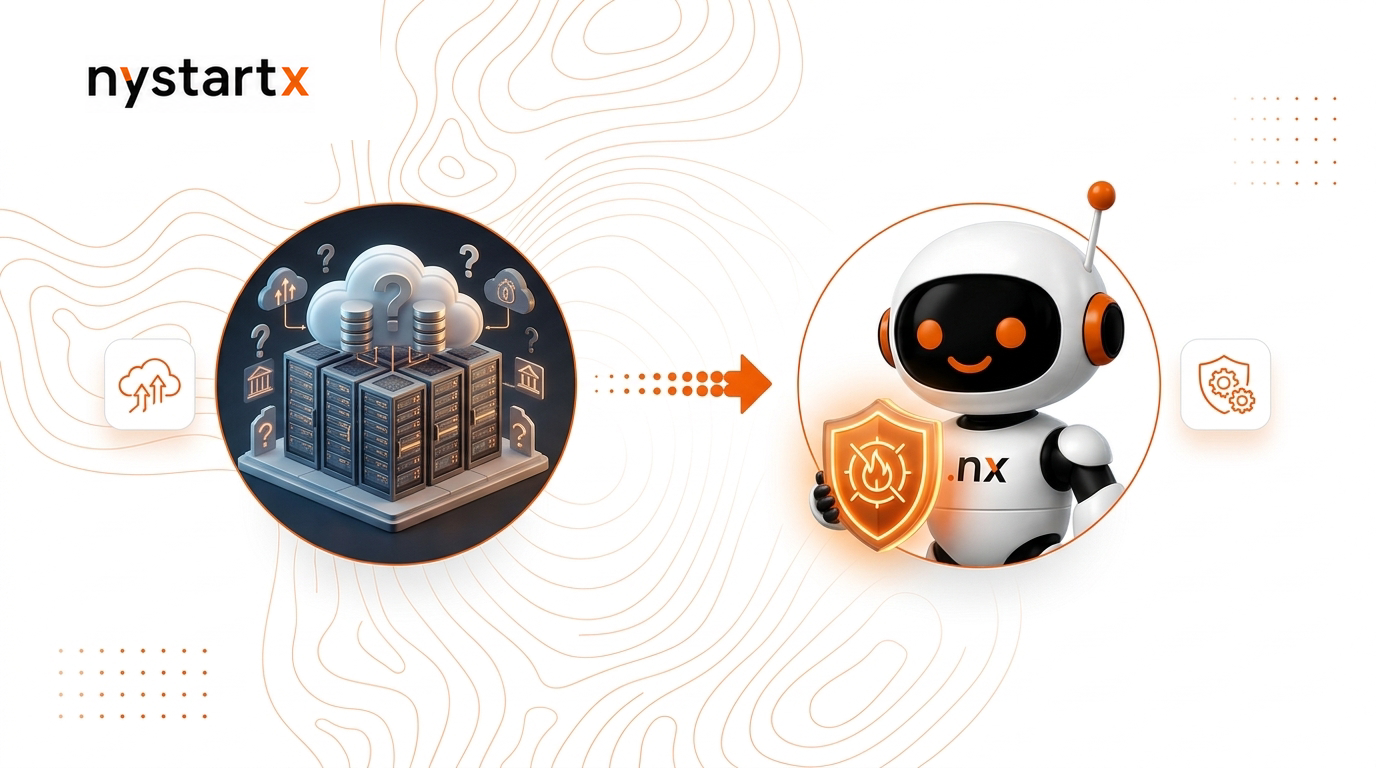
The value of WAF comes from controlling traffic at the application layer rather than simply allowing everything to reach your infrastructure.
What Does AWS WAF Cost?
AWS WAF pricing is primarily driven by four core dimensions:
- Web ACLs deployed across accounts or regions
- Rules and rule groups evaluated per request
- Number of HTTP/HTTPS requests inspected
- Additional managed protections such as Bot Control or Account Takeover Prevention
So the cost depends heavily on traffic volume and the rules you deploy. For example, a small application receiving a few thousand requests per month may have very little WAF overhead. Conversely, a high-traffic public API receiving millions of requests can have a very different cost profile.
This is why WAF should be evaluated alongside your application's traffic patterns and commercial risk rather than treated as a fixed infrastructure line item.
When Is WAF Worth It?
WAF becomes particularly valuable when your application exhibits one or more of these operational characteristics:
1. Public-Facing & Untrusted Traffic
Internet-facing applications are continuously exposed to automated scanners, vulnerability probes, credential stuffers, and malicious bots. WAF absorbs and filters malicious traffic before it consumes downstream application compute.
2. API-Heavy Endpoints
High-value transactional endpoints are attractive targets for automated abuse:
/login
/register
/checkout
/api/*
Rate-based WAF rules, anomaly detection, and synthetic challenges control excessive request velocity and prevent credential stuffing.
3. Handling Sensitive Data
If the application handles payments, customer accounts, credentials, or regulatory data, the potential financial and reputational cost of a security breach is significantly higher than the cost of protective controls.
4. Business-Critical Workloads
For an application where downtime or compromise directly impacts SLA guarantees, enterprise revenue, or customer trust, WAF is easy to justify as part of a defense-in-depth architecture.
When Might WAF Be Overkill?
Not every application needs a sophisticated WAF configuration. Consider a small internal application used by a limited number of employees and accessible only through a corporate network or private VPC.
In that situation, the engineering effort and WAF inspection costs provide less security return than investing in core defense fundamentals:
- Granular IAM role policies and least-privilege permissions
- VPC security groups, private subnets, and network segmentation
- Automated OS and container dependency patch management
- Centralized secrets management via AWS Secrets Manager
- Continuous audit logging and alerting with CloudTrail & CloudWatch
- Zero-trust network access and mandatory multi-factor authentication (MFA)
Security is not about deploying the maximum number of AWS console services. It is about protecting the risks that actually matter.
Don't Enable Everything
AWS provides powerful managed rules, rate limiting, Bot Control, CAPTCHA challenges, and fraud protection. That does not mean every application needs all of them enabled simultaneously.
For example, expensive inspection rules are unnecessary on static media assets, but highly valuable around sensitive authentication and payment routes:
/login
/register
/checkout
/api/*
Scoping protection to high-risk traffic improves both cost efficiency and security precision. Similarly, newly introduced rules can initially run in monitoring/Count mode before being enforced, baselining traffic patterns without risking false positives on legitimate customer requests.
The CTO Question
Instead of asking “How much does AWS WAF cost?”, engineering leaders should ask:
“What would an attack or outage cost us, and how much are we willing to spend to reduce that risk?”
For a small internal application, WAF may not be a priority. For a public-facing workload processing customer data or revenue, the economics can be completely different.
The right WAF strategy is therefore not the one with the most rules. It is the one that provides the right level of protection for the application's risk, traffic volume, and business value.
The Takeaway
AWS WAF should be treated as a risk-management decision, not a checkbox. Understand the application's exposure, identify the endpoints that actually need protection, estimate the traffic-based cost, and then deploy only the controls that provide meaningful value. That is how security becomes an organic pillar of good cloud architecture, rather than simply another line item on the AWS bill.
Related Engineering Blueprints
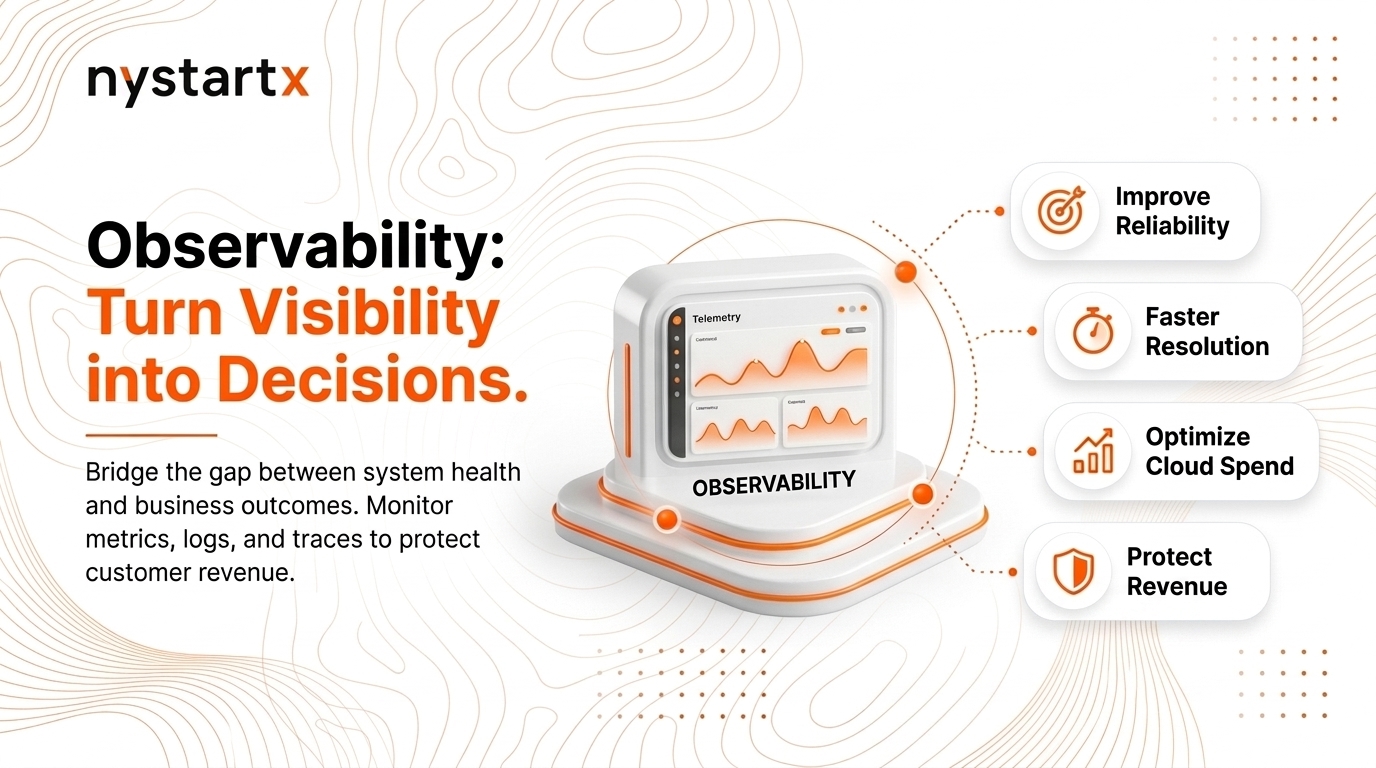
Observability: Turning System Visibility Into Better Business Decisions
Your dashboards are green, but transactions are failing. Discover how enterprise observability transforms telemetry (metrics, logs, and distributed traces) into actionable business outcomes, rapid incident resolution, and cloud cost control.
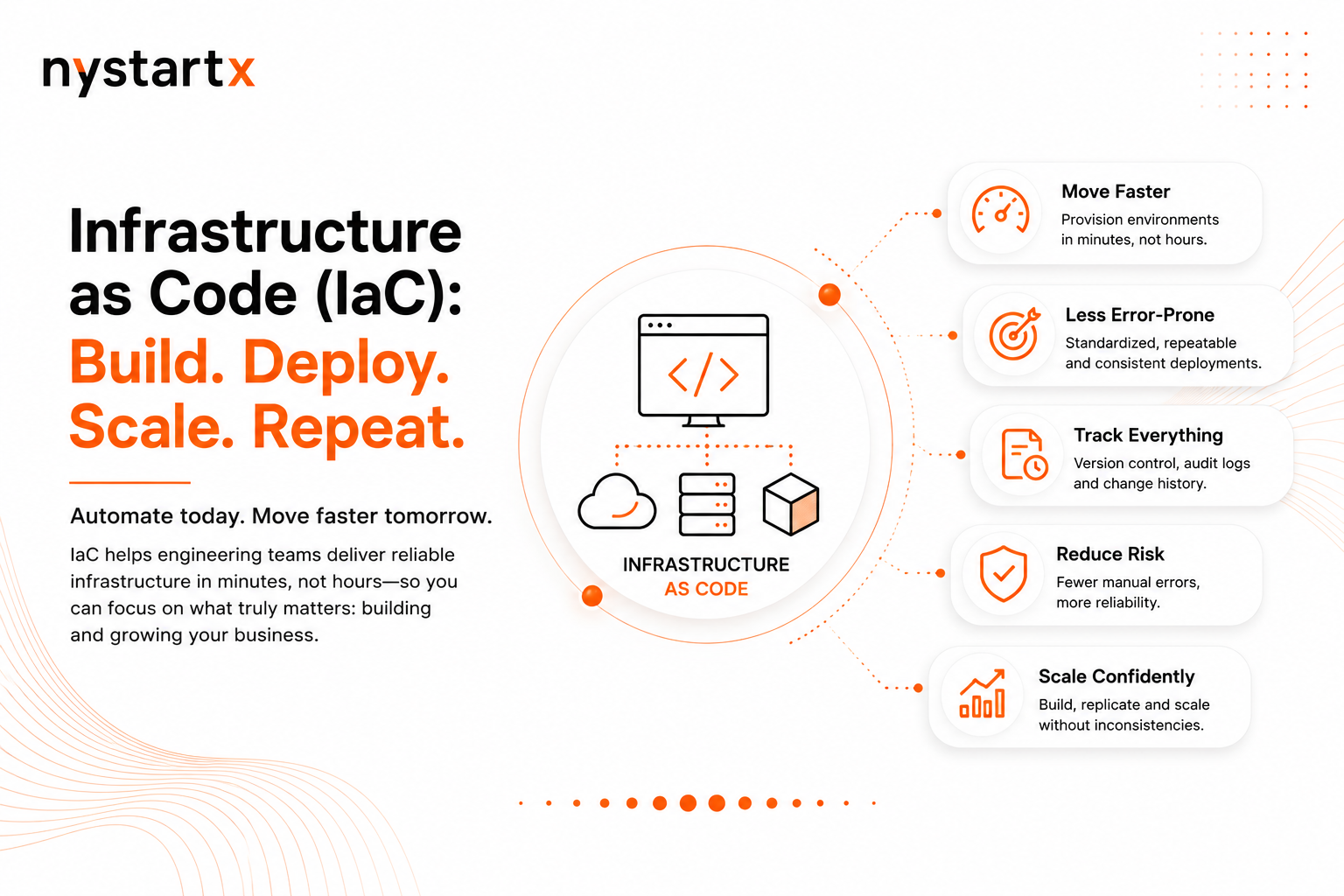
Infrastructure as Code: The End of Manual Cloud Provisioning
As businesses grow, infrastructure complexity grows with them. Infrastructure as Code changes the game by making deployments consistent, repeatable, and fully version controlled: so your teams spend less time fixing environments and more time shipping.
Schedule a direct technical consultation with our engineering team.
Direct access to experienced technical leads. No sales pressure, just rigorous architectural review of your cloud infrastructure, Salesforce org, or application roadmap.